
How Africhange stopped paid installs from defaulting to organic, and grew paid attribution share 19x
Africhange paid installs were attributing to Organic, inflating CPI on every channel. After the AppsFlyer rebuild, paid share went from 2.4% to 47%.
AppsFlyer was live but almost nothing about it was attributing correctly
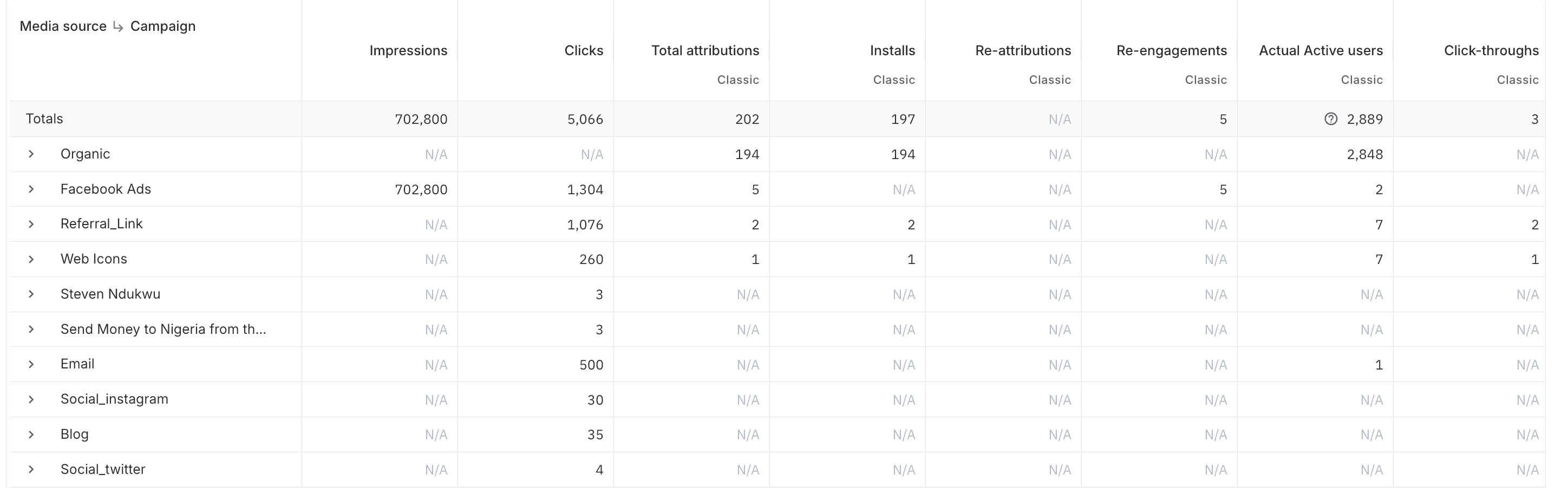
Africhange had real traffic already. Organic, referral, email, content partnerships and AppsFlyer installed to measure it. But the implementation was incomplete on both web and app, so most of that traffic wasn't converting into anything the team could act on. In the period before the engagement, 5,066 clicks produced just 202 attributions, and 194 of those were credited to Organic.
The bigger risk was still ahead. If paid campaigns across Meta, Google, X, and TikTok launched on a schema that couldn't tell paid from organic, that spend would have gone straight to waste from day one.
Fix the measurement layer completely, web and app, iOS and Android, before the first paid campaign went live.
Four gaps, discovered before they got expensive.
None of this was visible from the dashboard. It only showed up once someone checked what was actually being measured. And because paid clicks had nowhere to attribute to, most of what should have shown up as Meta, Google, or Twitter installs was landing in the Organic bucket instead.
In the period before the engagement, the app tracked 5,066 clicks across its existing channels and got back just 202 attributions, 194 of them credited to Organic. Facebook Ads, the only paid channel live at the time, turned 1,304 clicks into five attributions and not a single attributed install.
There was no structured way to connect a user's activity on the website to what they did once they moved into the app, so cross-platform behavior was invisible.
The AppsFlyer SDK wasn't fully implemented across the app, and AdAttributionKit, Apple's newer successor framework to SKAN, wasn't configured at all. Core actions like KYC and completed transfers had no reliable path to the MMP on either framework.
No SKAN conversion schema existed, and none of the four ad channels planned for launch, Meta, Google, X, TikTok, were integrated yet. Whatever was broken in the existing setup would carry straight into paid spend.
What happened, once paid campaigns went live.
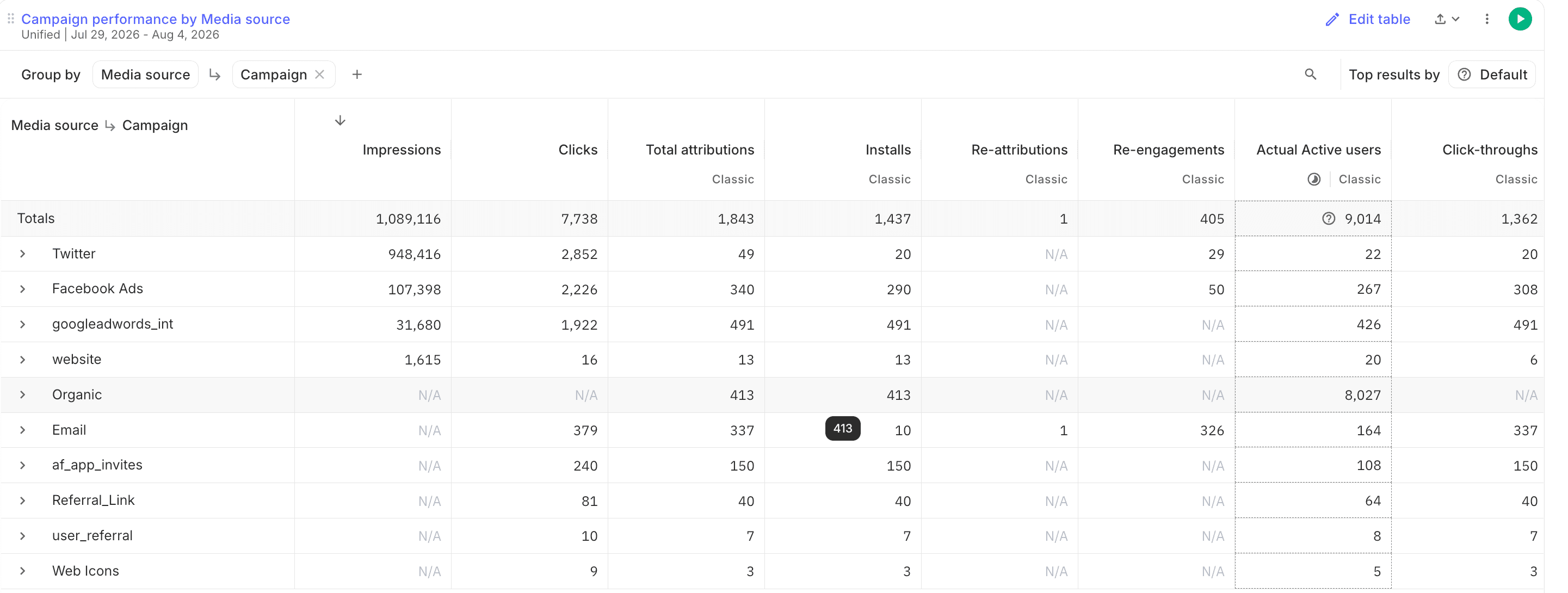
Same rebuilt stack, same AppsFlyer account, measured across the first week of real paid spend across Twitter, Facebook Ads, and Google Ads.
The app was about to spend real budget on top of measurement that was quietly crediting most of it to Organic, inflating reported CPI on every paid channel. Once the stack was fixed and campaigns went live, paid channels went from 2.4% to 47% of total attribution in the first week, proof the fix held the moment real money went out the door.
The team at Africhange worked with Muffaddal to revamp our AppsFlyer setup and ensure that attribution for both Android and iOS is accurate. Muffaddal delivered exceptionally and took his time to set up attribution in a way that suits our products and needs. I recommend.

AFRICHANGE
How HappyShyPeople turned untracked paid web traffic into a fully attributed web-to-app funnel
How Bridebook discovered their campaigns were performing 41% better than the reports showed
How a consumer app fixed a broken revenue signal before a single ad campaign ever used it
If you're about to turn on paid spend and you're not fully sure the measurement underneath it is right, that's exactly the moment to check.
No commitment. Just a clear read on what's broken and what it would take to fix it before spend goes out. Because it's far cheaper to fix the measurement before spend goes out than to discover it was broken after.